Abstract
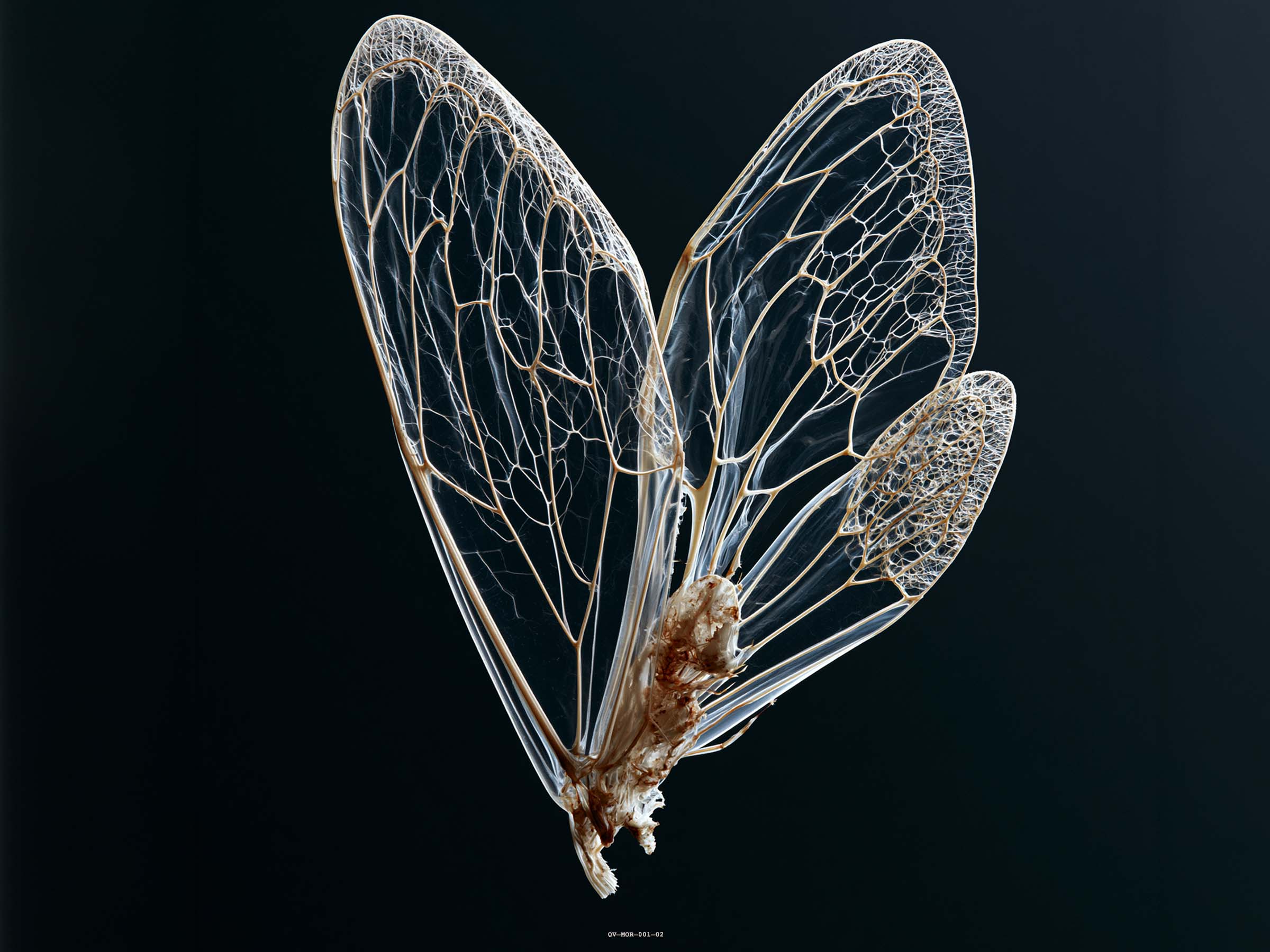
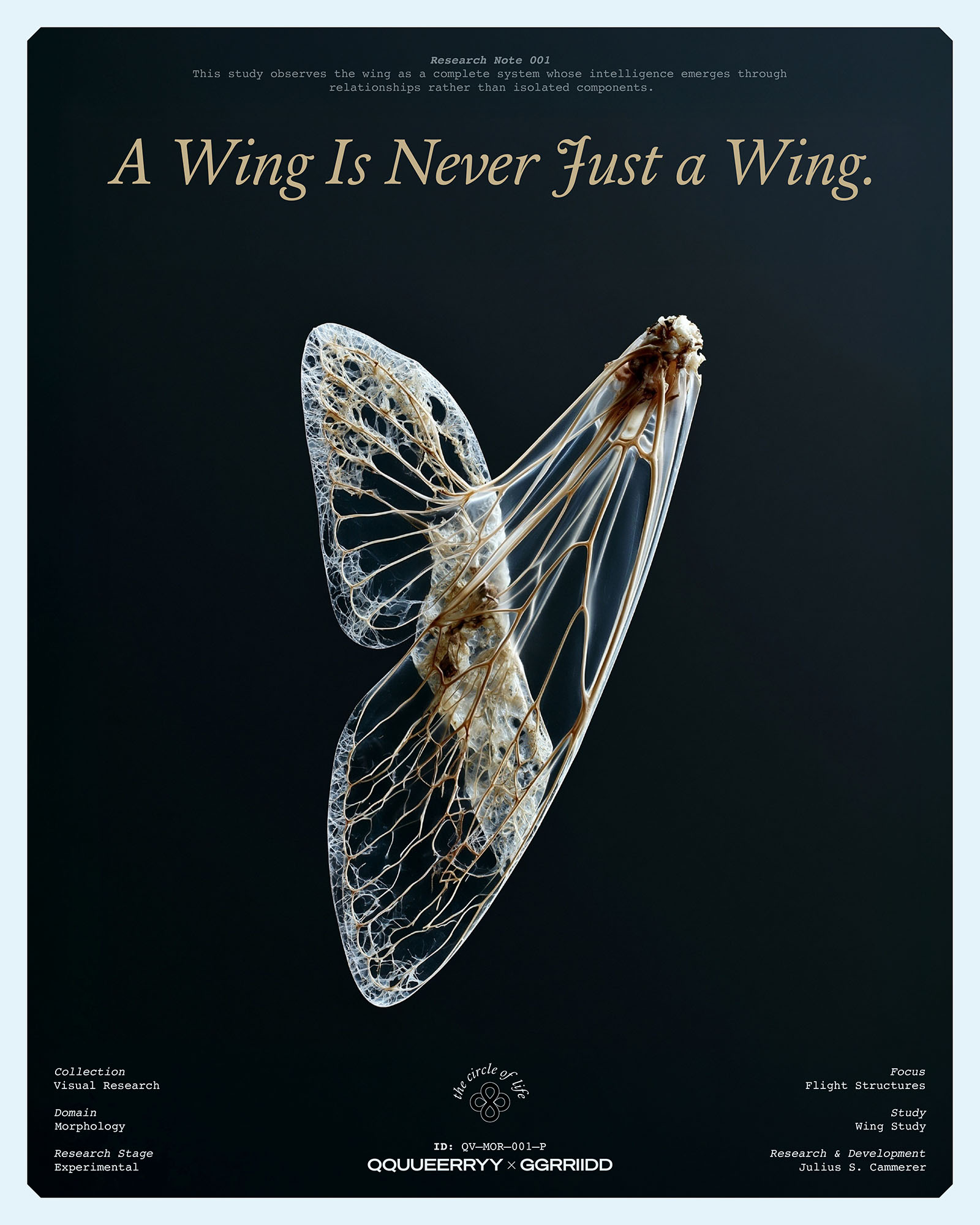
We often believe that naming something means understanding it. A wing, a leaf or a root quickly become familiar concepts, reducing complex living systems to simple labels. This Research Note explores what happens when observation continues beyond recognition.
By examining the morphology of an insect wing, this study investigates how structural intelligence emerges through relationships rather than isolated components. Instead of searching for a single function, it considers the interaction between geometry, hierarchy, material properties and force.
The wing ultimately becomes more than an anatomical structure. It becomes a reminder that understanding begins where observation replaces assumption.
The Question
What if a wing is more than a wing?
The question appears almost trivial. After all, a wing is simply one part of an insect. Yet the longer it is observed, the less convincing that definition becomes.
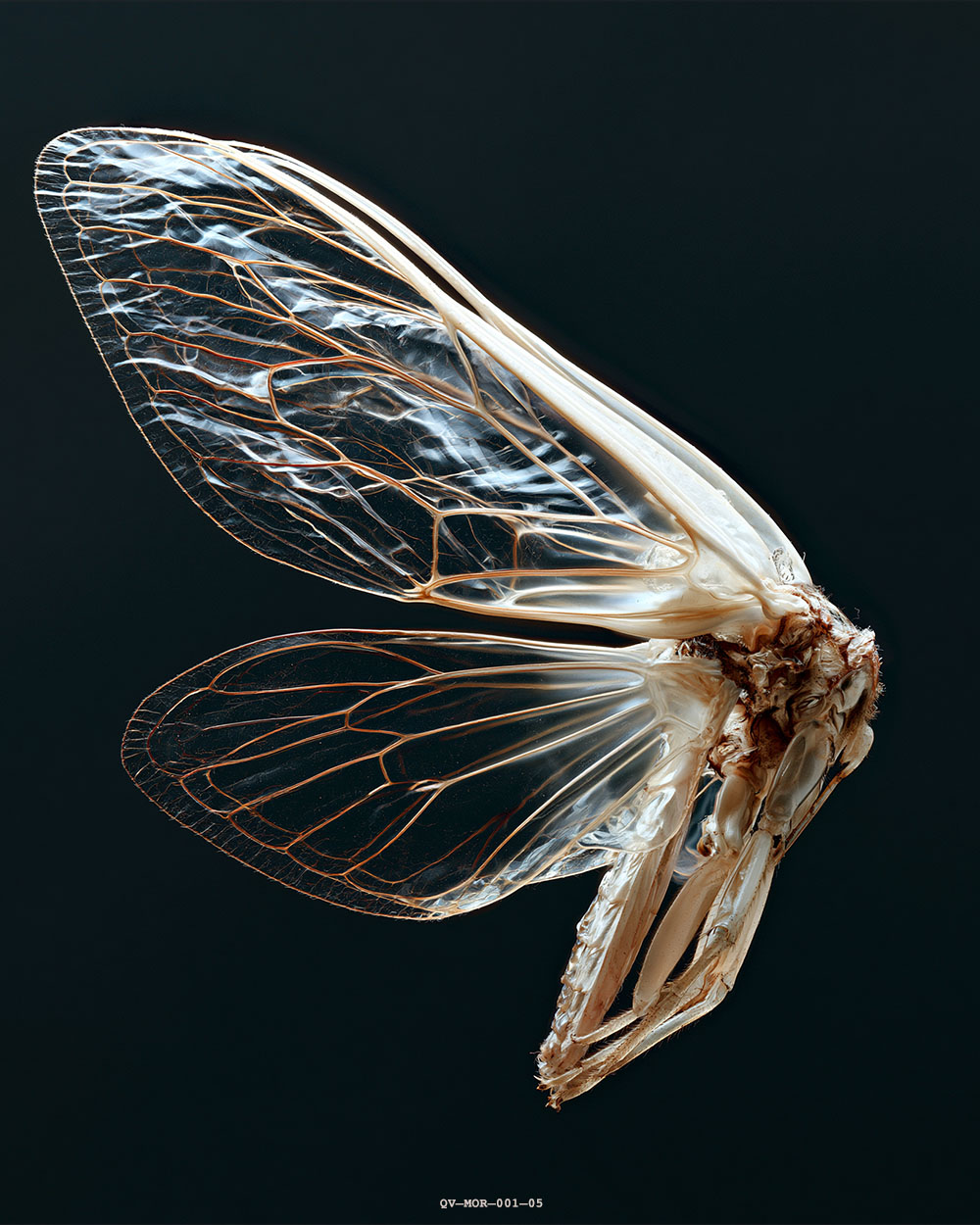
Rather than behaving like an isolated object, the wing reveals itself as a continuous structural system. Every vein, membrane and transition contributes to a larger network of relationships. Its performance cannot be explained by individual parts alone, but by the way those parts interact.
This investigation did not begin with an attempt to prove a theory. It began with curiosity. What becomes visible when we resist the urge to stop looking once we recognize something?
First Observations
Observation changes perception.
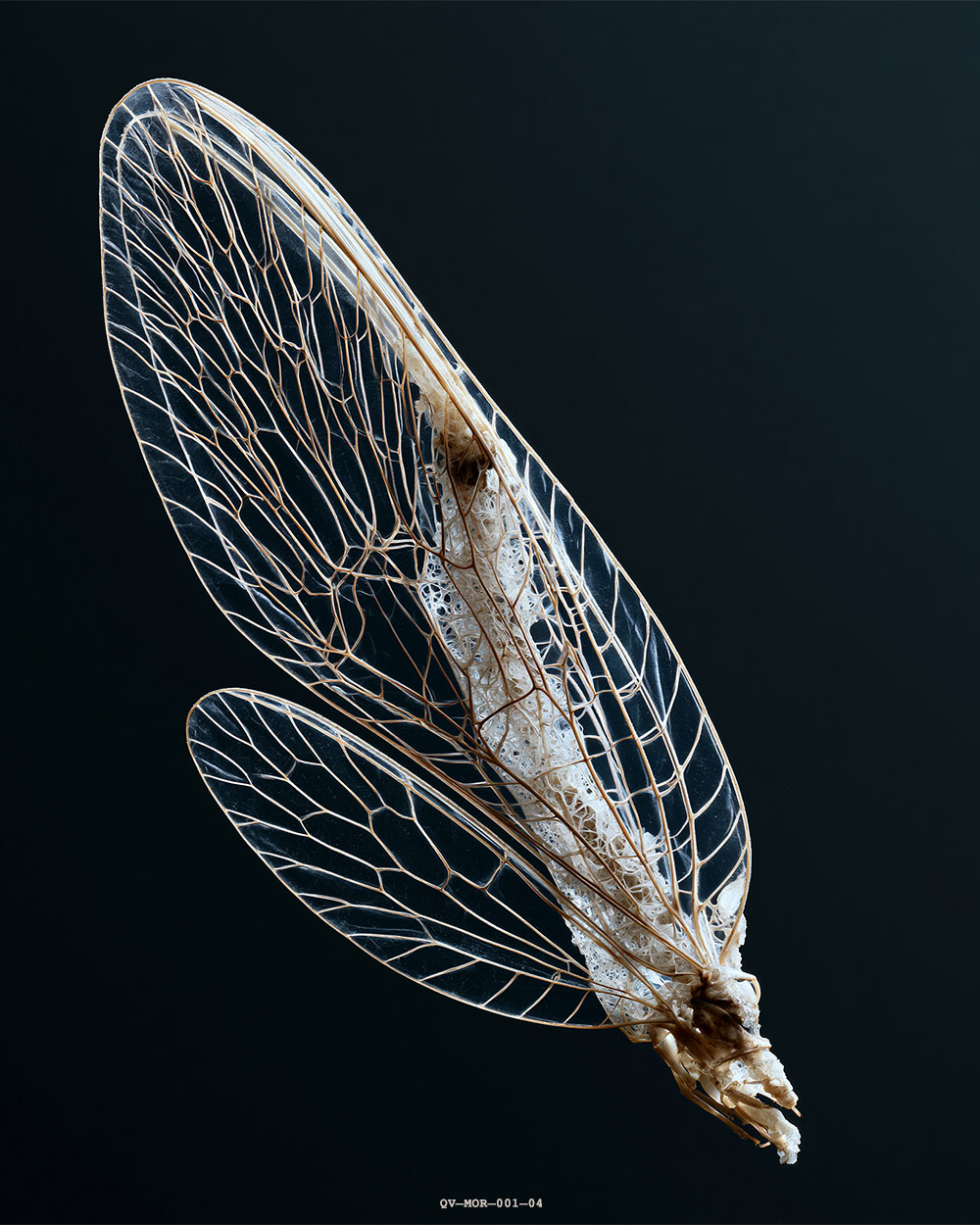
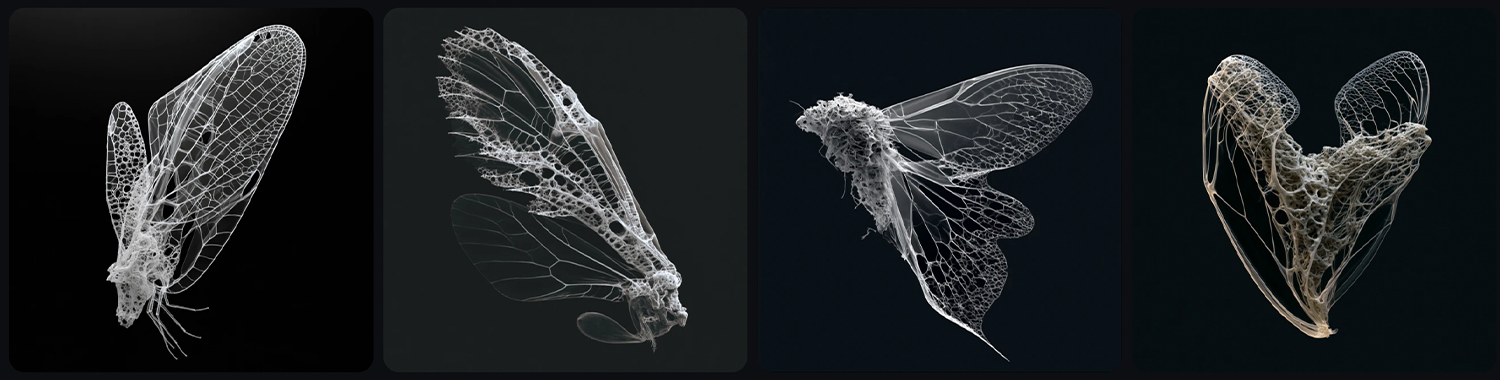
At first glance the wing appears delicate, almost fragile. Under closer examination, however, it reveals remarkable structural complexity. Material density shifts continuously, supporting veins branch into increasingly refined hierarchies and flexible membranes connect rigid elements without clear boundaries.
Nothing appears arbitrary.
Every transition seems to respond to a specific structural requirement. Strength and flexibility are not separated but carefully distributed across the entire system.
The longer the specimen is observed, the more difficult it becomes to describe it as a collection of parts. Instead, it begins to reveal the characteristics of an integrated system whose intelligence emerges through relationships rather than individual components.
Looking Closer
Observation is rarely a single moment.
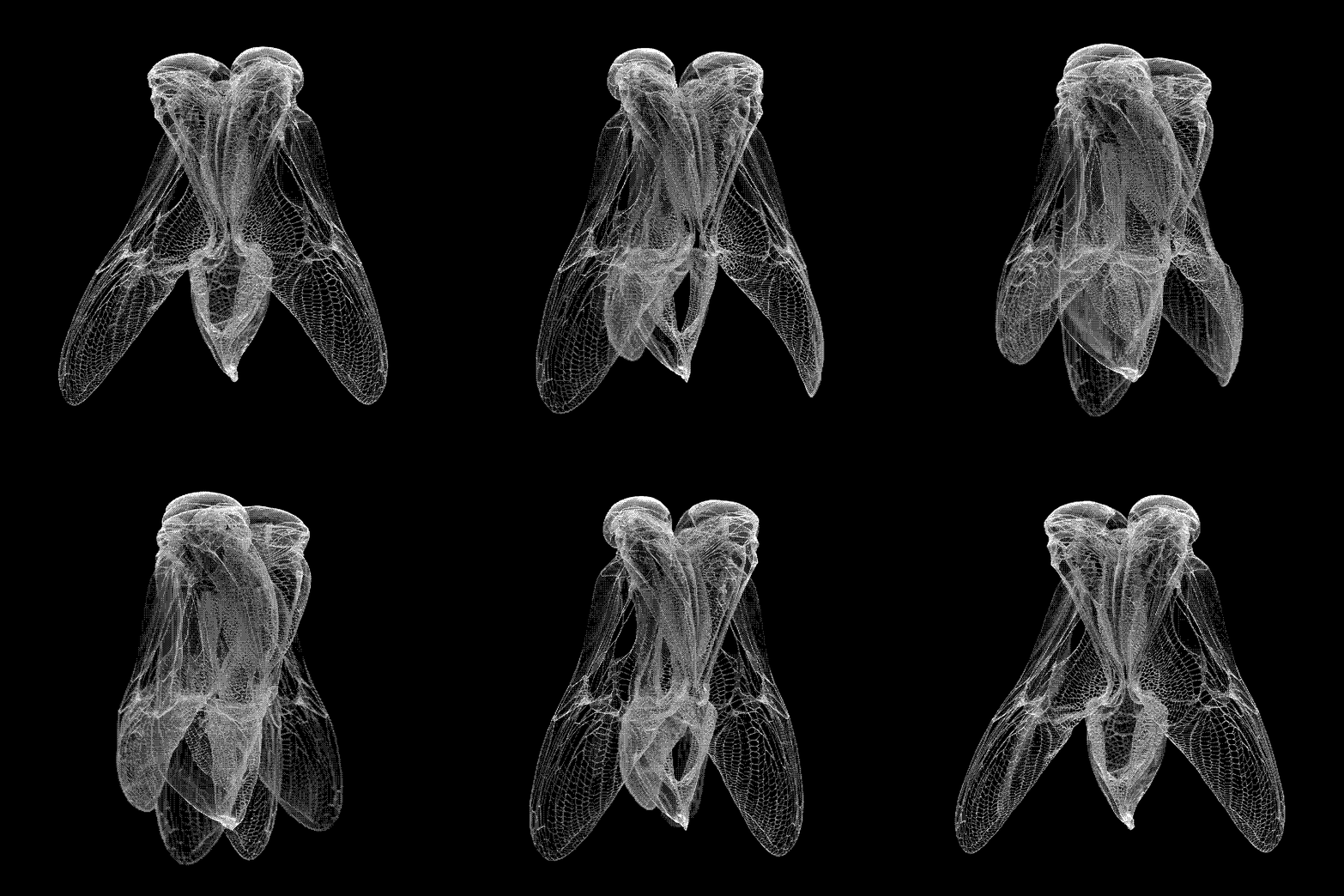
Every increase in scale reveals new layers of organization. Patterns that appear random from a distance gradually resolve into highly ordered relationships. Structural hierarchies become visible. Material transitions emerge. Connections previously overlooked begin to define the system itself.
The question is no longer what the wing looks like.
The question becomes how its organization enables its function.
Research Observations
Observation 01
Structural intelligence emerges through relationships rather than isolated components.
Observation 02
Material properties shift gradually across the entire wing instead of changing abruptly.
Observation 03
Hierarchy allows the structure to combine rigidity, flexibility and low weight within a single continuous system.
Biological Context
Insect wings represent millions of years of evolutionary adaptation. Rather than being designed for perfection, they have continuously changed through variation, selection and environmental pressures.
Their architecture reflects biological efficiency rather than optimization toward a single ideal. Material is distributed only where required. Structural hierarchies balance strength with flexibility. Every relationship contributes to the performance of the whole.
Understanding these systems requires looking beyond anatomy and considering the principles that organize living structures over time.
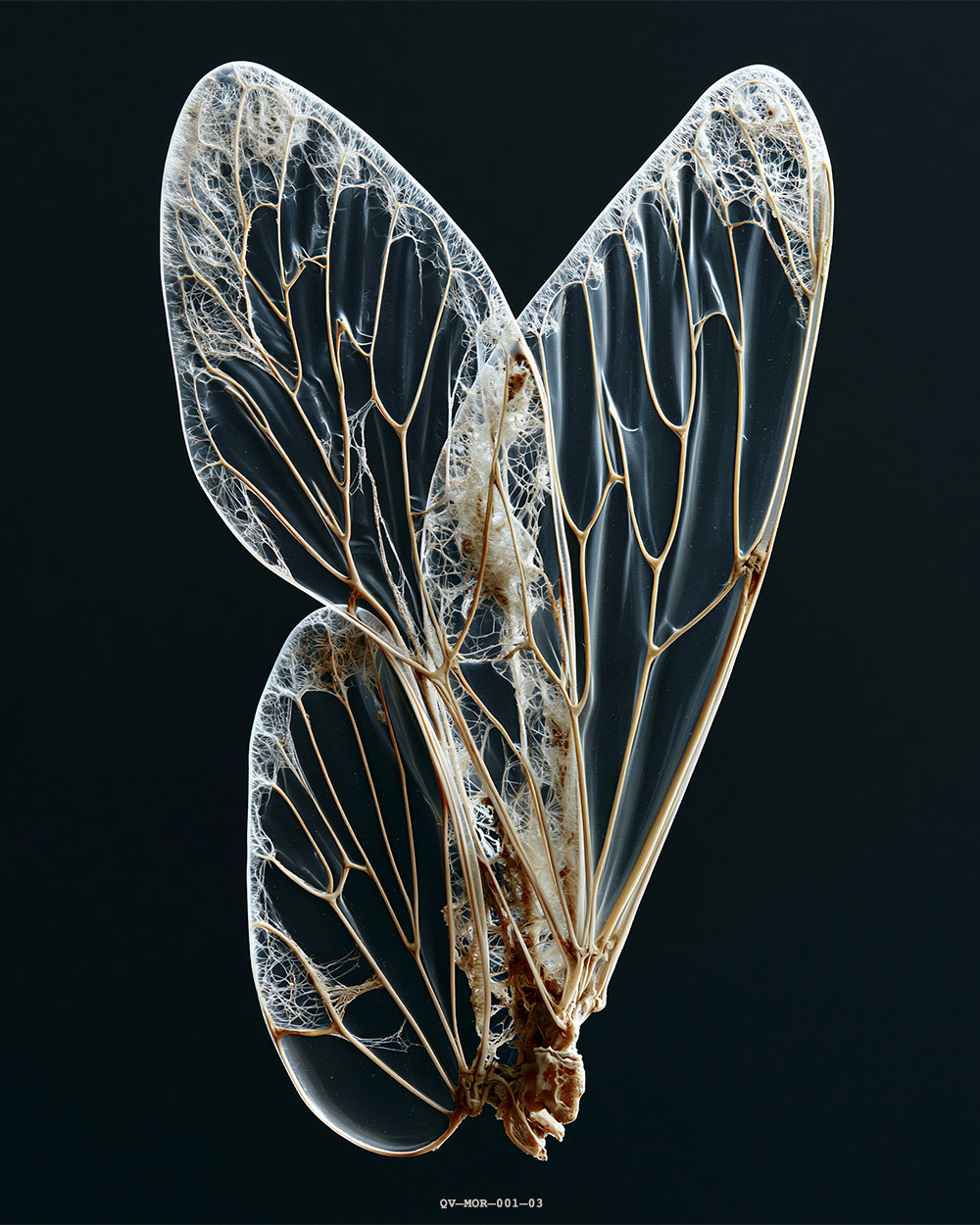
"Perhaps the wing has never been just a wing."
Reflection
Calling something a wing creates the comforting feeling that it has been understood.
Yet names often conceal complexity instead of revealing it.
This investigation suggests that the wing itself may never have been the true subject. What emerged instead was a broader observation about the way we interpret the world. We tend to separate systems into individual objects because objects are easier to describe.
Living systems rarely behave that way.
Perhaps understanding begins when we stop asking what something is and start asking how its relationships create the whole.
Naming is not understanding.
Continue the Research
This investigation is not intended as a conclusion but as the beginning of a broader conversation.
If a structure as familiar as a wing reveals unexpected complexity through careful observation, how many other biological systems remain hidden behind the names we give them?
Every Research Note published by QQUUEERRYY represents a snapshot within an ongoing investigation. Each study raises new questions, expands previous observations and contributes to a growing archive exploring the principles of living systems.
Further Questions
- At what point does a structure become a system?
- How does structural intelligence emerge through relationships?
- Which other biological systems reveal similar organizational principles?
- Can observing living systems change the way we design human systems?
References
- Stephen Jay Gould
Full House: The Spread of Excellence from Plato to Darwin
(Harvard University Press, 1996) - François Jacob
Evolution and Tinkering
Science, Vol. 196, No. 4295 (1977) - Andreas Wagner
Arrival of the Fittest: Solving Evolution’s Greatest Puzzle
(Penguin Random House, 2014) - Richard C. Lewontin
The Triple Helix: Gene, Organism, and Environment
(Harvard University Press, 2000) - Kevin N. Laland
Darwin’s Unfinished Symphony: How Culture Made the Human Mind
(Princeton University Press, 2017) - Donella H. Meadows
Thinking in Systems: A Primer
(Chelsea Green Publishing, 2008)
Suggested Reading
- Stephen Jay Gould - Full House
- Andreas Wagner - Arrival of the Fittest
- Donella H. Meadows - Thinking in Systems
Research Information
Method Statement: QQUUEERRYY is grounded in an iterative research methodology combining biological inquiry, scientific literature, systems thinking, observation, writing, curation and visual communication. This visual was developed within this research process and may incorporate generative artificial intelligence as one of several tools used to support exploration, visualization and communication.
Every answer creates another question. The investigation continues.