Abstract
Perfection is one of the most familiar ideas in human thinking. We pursue it in education, engineering, design, organizations and even in ourselves. It promises certainty, completion and the absence of flaws. Because the concept appears so self-evident, we rarely stop to ask where it actually comes from.
This Research Note investigates whether perfection is a meaningful concept in living systems. Rather than searching for examples that appear perfect, the investigation examines the language biology uses to describe life itself. As observations accumulate, an unexpected pattern begins to emerge. Evolution rarely speaks about perfection. Instead, it describes variation, adaptation, resilience and continuous change. Perhaps the question is not whether nature achieves perfection. Perhaps the more fundamental question is why humans expect it to.
The Question
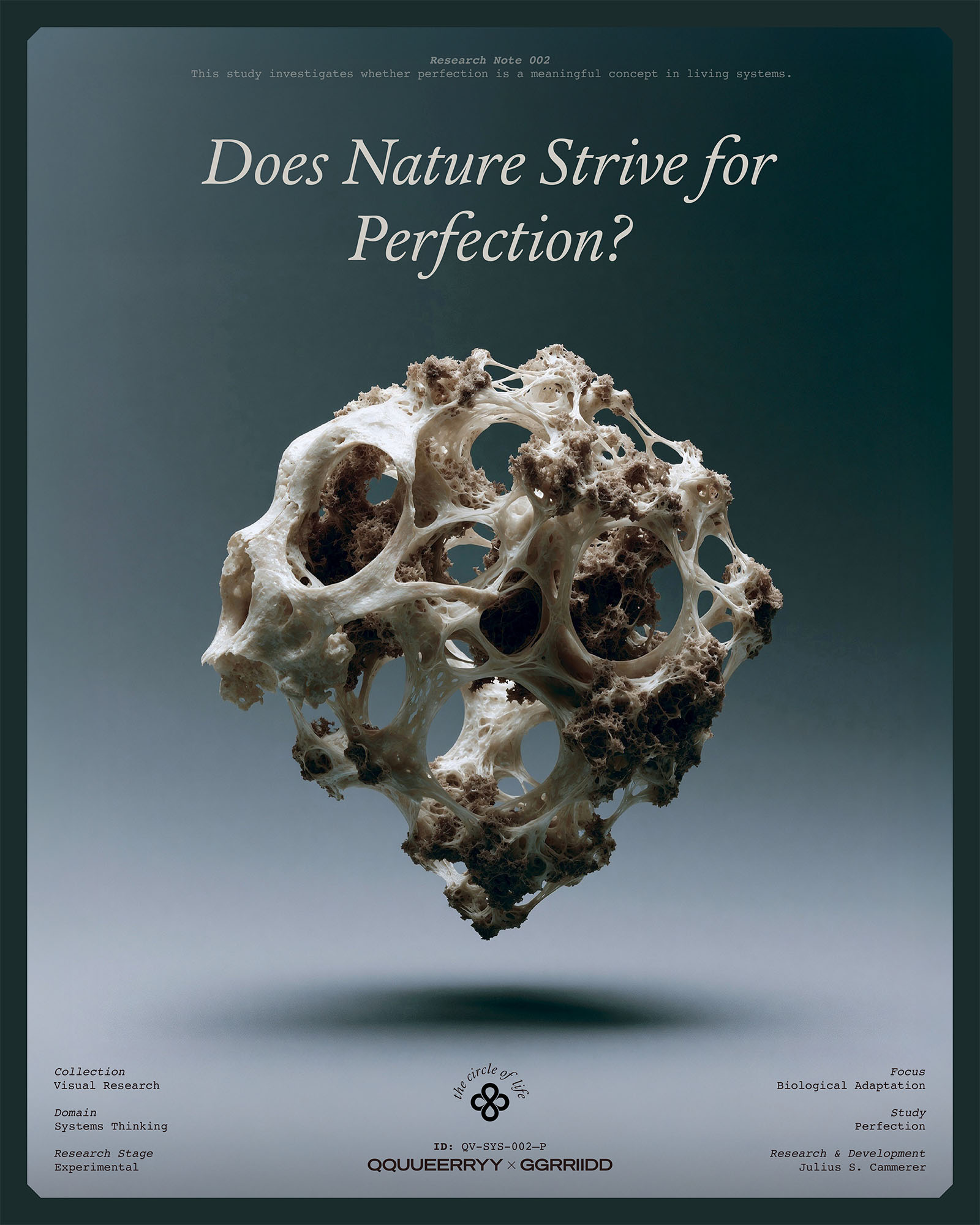
Does nature strive for perfection?
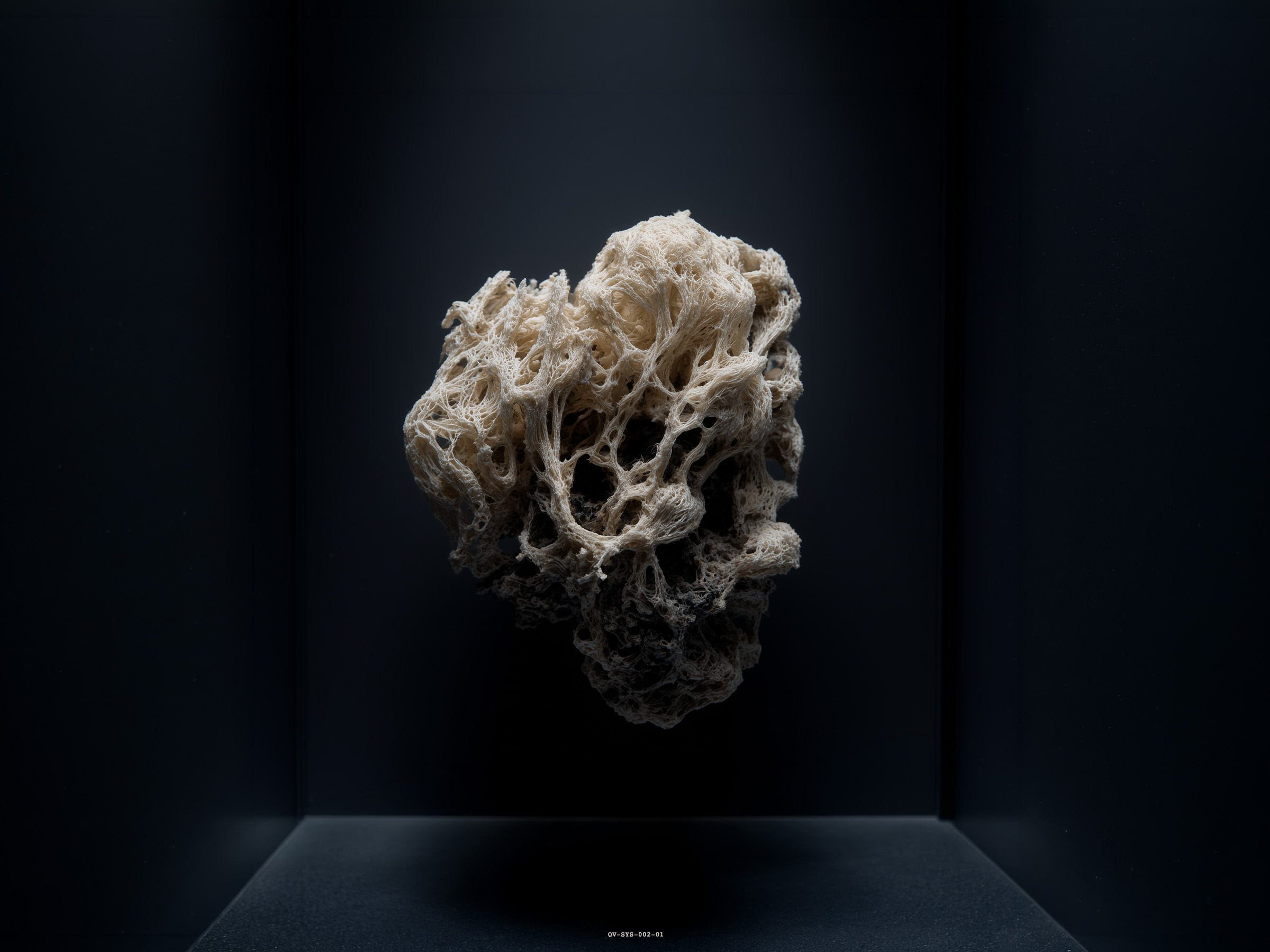
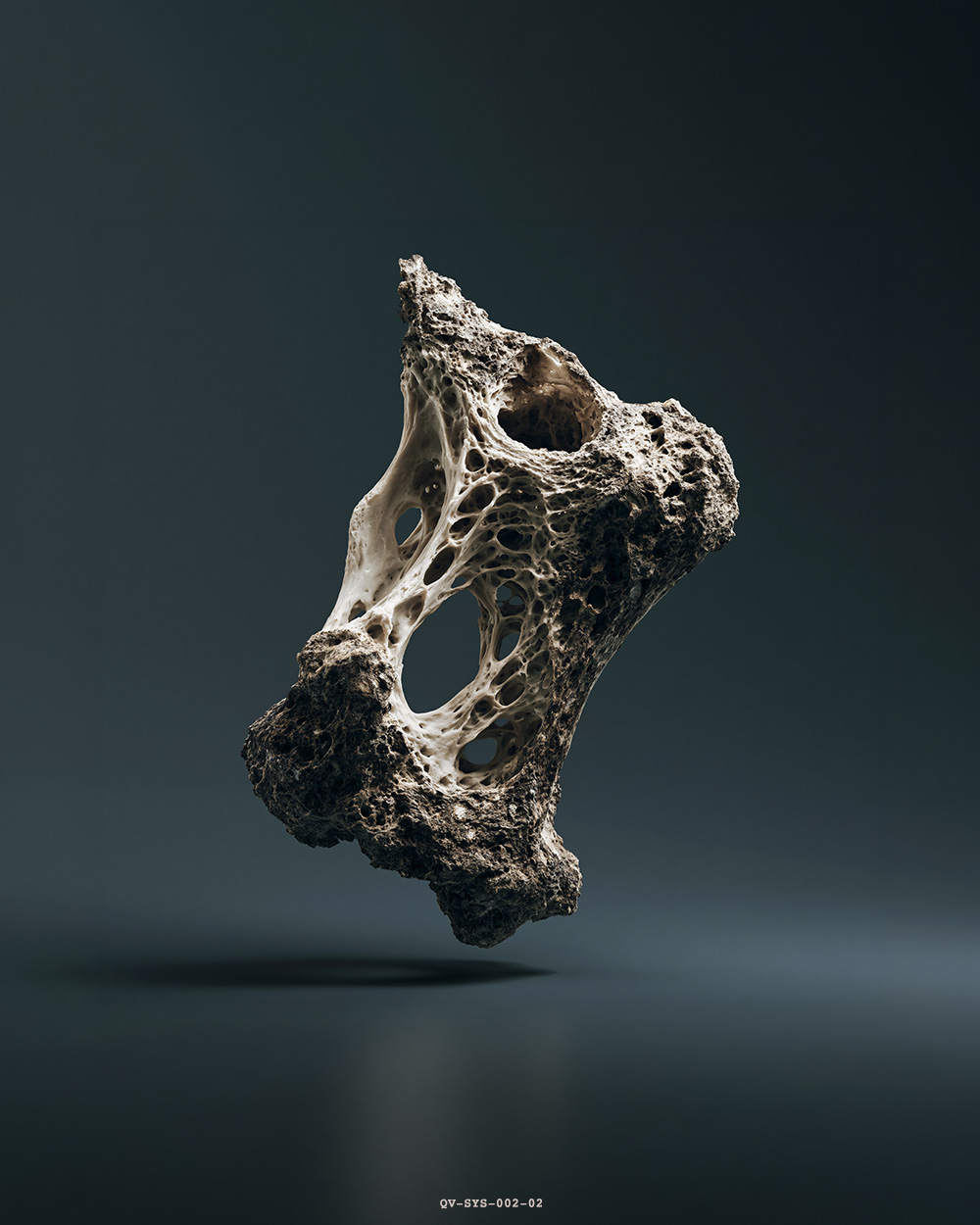
At first, the question seems almost impossible to answer. Many living organisms appear astonishingly refined. A bird’s wing generates lift with remarkable efficiency. Bone distributes material with extraordinary precision. Leaves organize themselves into intricate patterns that seem almost mathematical. It is tempting to describe these structures as perfect. Yet the longer they are observed, the less convincing that description becomes.
No two leaves are identical. Trees rarely grow symmetrically. Bones continuously remodel themselves throughout life. Wounds heal, but scars remain. Organisms change as environments change. Living systems rarely preserve a fixed state. Instead, they respond, adjust and reorganize over time. The investigation therefore shifts. Rather than asking whether biological structures appear perfect, another question emerges. What concepts does biology actually use to describe them? Like every QQUUEERRYY Research Note, this study did not begin with an attempt to prove a hypothesis. It began with curiosity.
What happens when we examine one of humanity’s oldest ideas through the perspective of living systems?
First Observations
Observation often begins by questioning language. The more scientific literature was reviewed, the more one absence became increasingly noticeable.
Biologists rarely describe organisms as perfect. Instead, they speak about adaptation.
- Variation.
- Fitness.
- Plasticity.
- Trade-offs.
- Resilience.
These words appear repeatedly across evolutionary biology, ecology and systems science. Perfection appears surprisingly rarely. This observation does not immediately invalidate the concept. But it raises an important question. If perfection truly governed living systems, why does biology so rarely rely on it to explain them? Instead of describing organisms as moving toward an ideal state, biological research consistently portrays life as an ongoing process of adjustment. Nothing appears finished. Everything remains responsive. The longer this pattern is observed, the more perfection begins to resemble a human interpretation rather than a biological principle.
Looking Closer
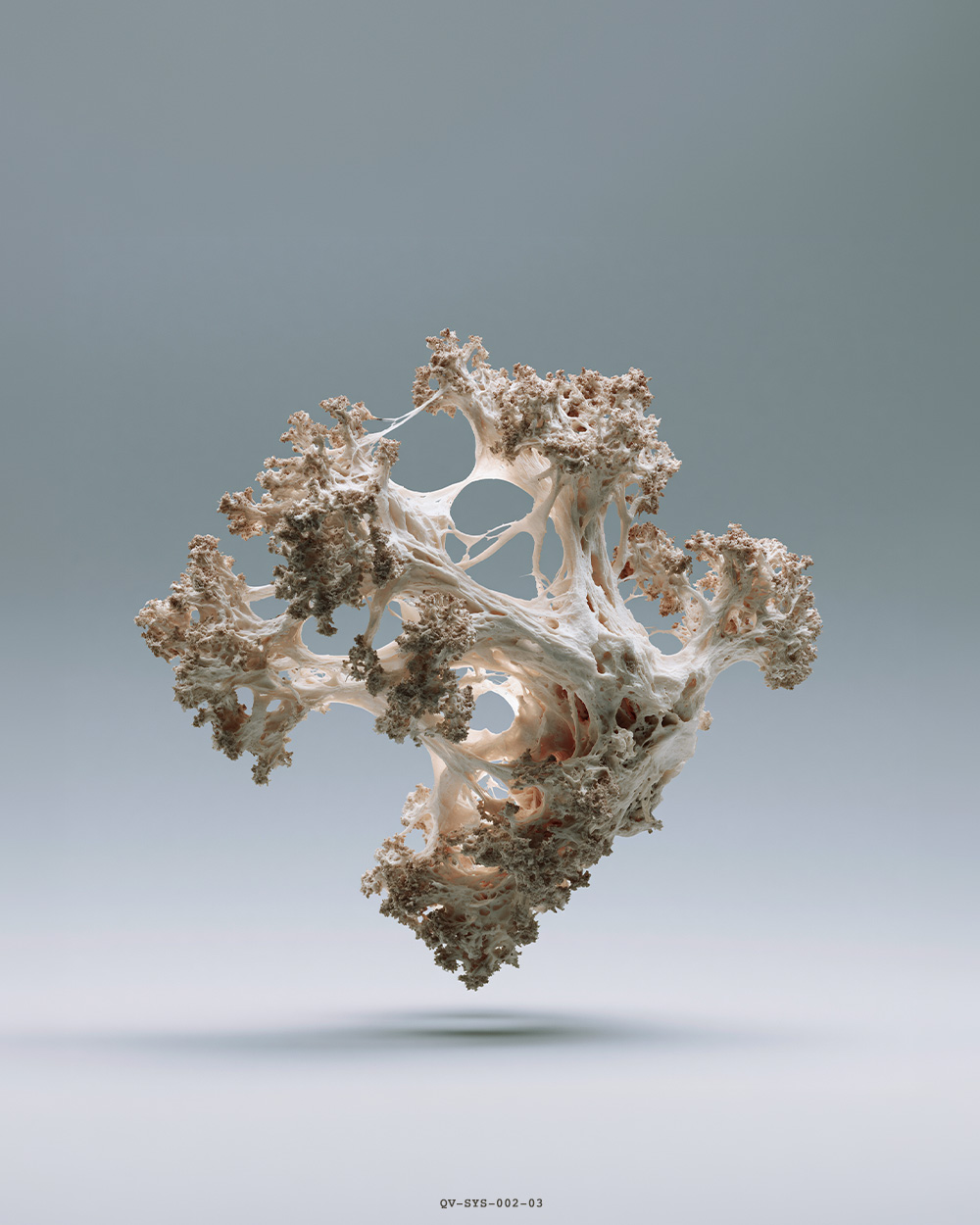
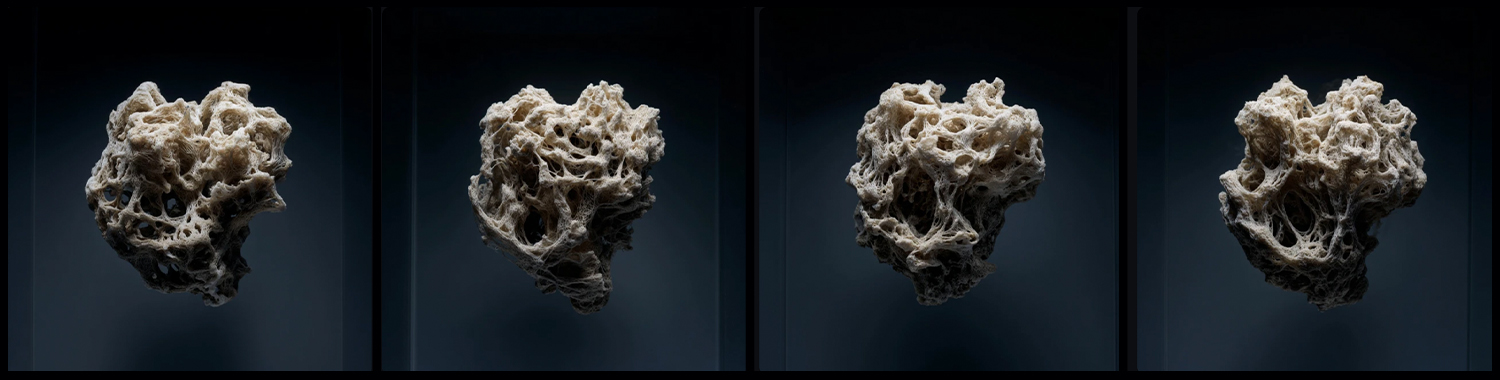
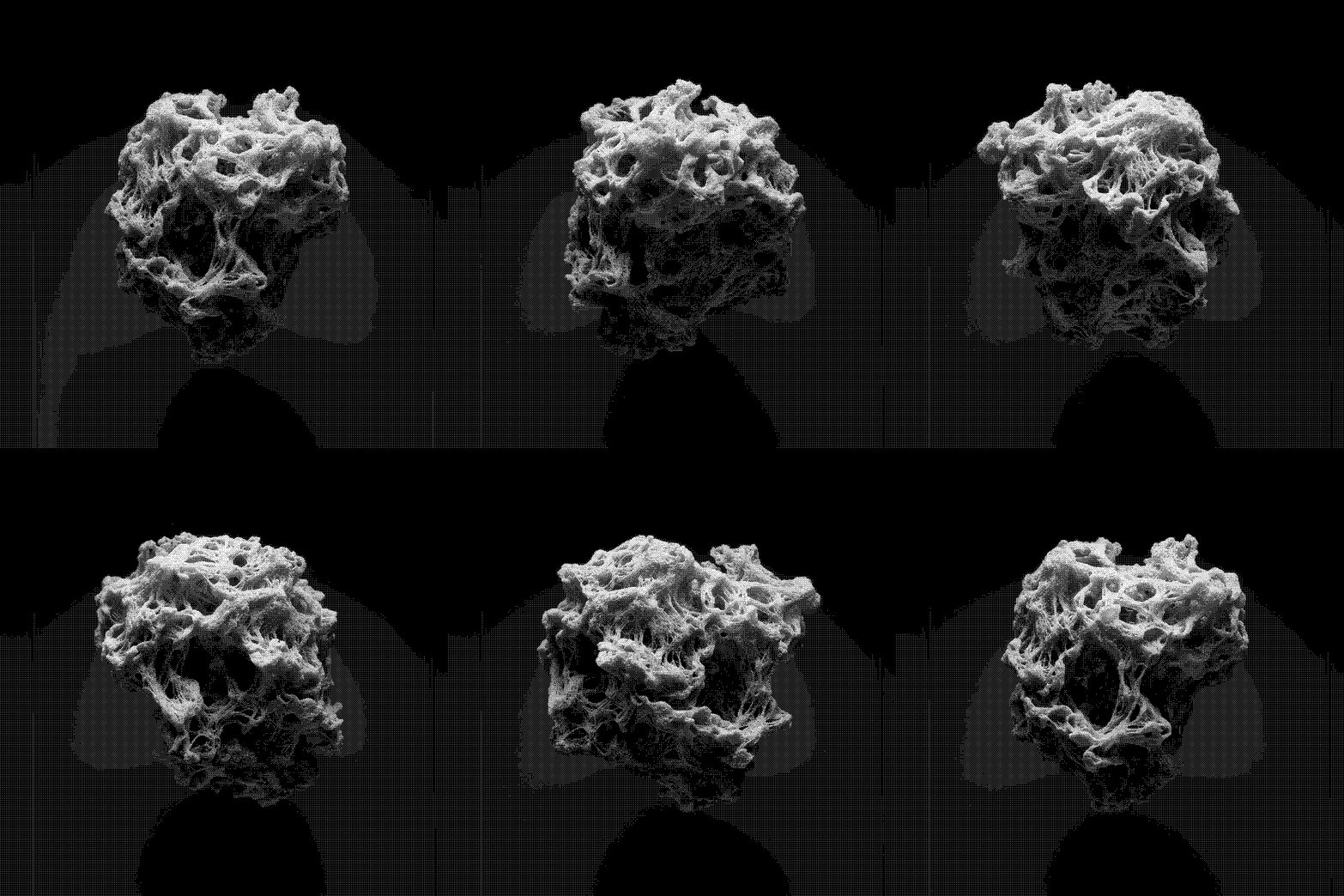
Observation changes when assumptions are temporarily suspended. Once the expectation of perfection is removed, different patterns begin to emerge. Variation is everywhere. Every branch develops slightly differently. Every skeleton carries traces of its own history. Every organism reflects countless interactions with changing environments. These differences are not hidden imperfections waiting to be corrected. They are the visible record of adaptation. Even structures that appear highly optimized reveal countless compromises when examined more closely. A bird’s skeleton sacrifices robustness to reduce weight. A tree invests energy into stability while giving up geometric symmetry. Bone constantly removes and rebuilds material according to mechanical demand rather than preserving a fixed architecture. The closer living systems are observed, the more they reveal negotiation instead of optimization. Balance instead of maximization. Relationships instead of ideals. Perhaps what appears perfect from a distance is simply the visible outcome of continuous adaptation. Not completion. But continuation.
Research Observations
The investigation gradually shifted away from individual examples toward broader biological principles. Across evolutionary biology, ecology and systems science, the same pattern appeared repeatedly. Living systems were rarely described as striving toward an ideal state. Instead, they were understood through continuous interaction with changing environments. Adaptation, rather than perfection, emerged as the recurring principle.
These observations do not suggest that organisms are imprecise or inefficient. Quite the opposite. Many biological structures achieve extraordinary performance. Yet their performance results from balancing competing requirements instead of maximizing a single characteristic. Living systems continuously negotiate limitations rather than eliminating them.
Observation 01
Variation is not a deviation from biological order. It is one of the fundamental conditions that enables evolution and adaptation.
Observation 02
Evolution does not move toward perfection. It continuously responds to changing environmental conditions without a predetermined endpoint.
Observation 03
Living systems rarely maximize a single characteristic. Strength, flexibility, efficiency, robustness and energy consumption exist in constant balance through biological trade-offs.
Biological Context
One of the most revealing aspects of this investigation was not found in a particular organism, but in the language of biology itself. Scientific literature consistently explains living systems through concepts such as variation, fitness, adaptation, resilience and natural selection. Perfection, by comparison, occupies almost no explanatory role.
This distinction matters because language reflects the underlying models we use to understand reality. Perfection describes a finished condition. Adaptation describes an ongoing relationship. One implies completion, the other continuous responsiveness.
Evolution offers no evidence of a final destination. Every generation encounters different environmental pressures, different ecological interactions and different opportunities for change. A characteristic that improves survival under one set of conditions may become disadvantageous under another. As environments change, organisms continue changing with them.
Seen from this perspective, biological success is not measured by closeness to an ideal, but by the capacity to remain functional while conditions continue to change. Stability emerges not through permanence, but through continuous adjustment.
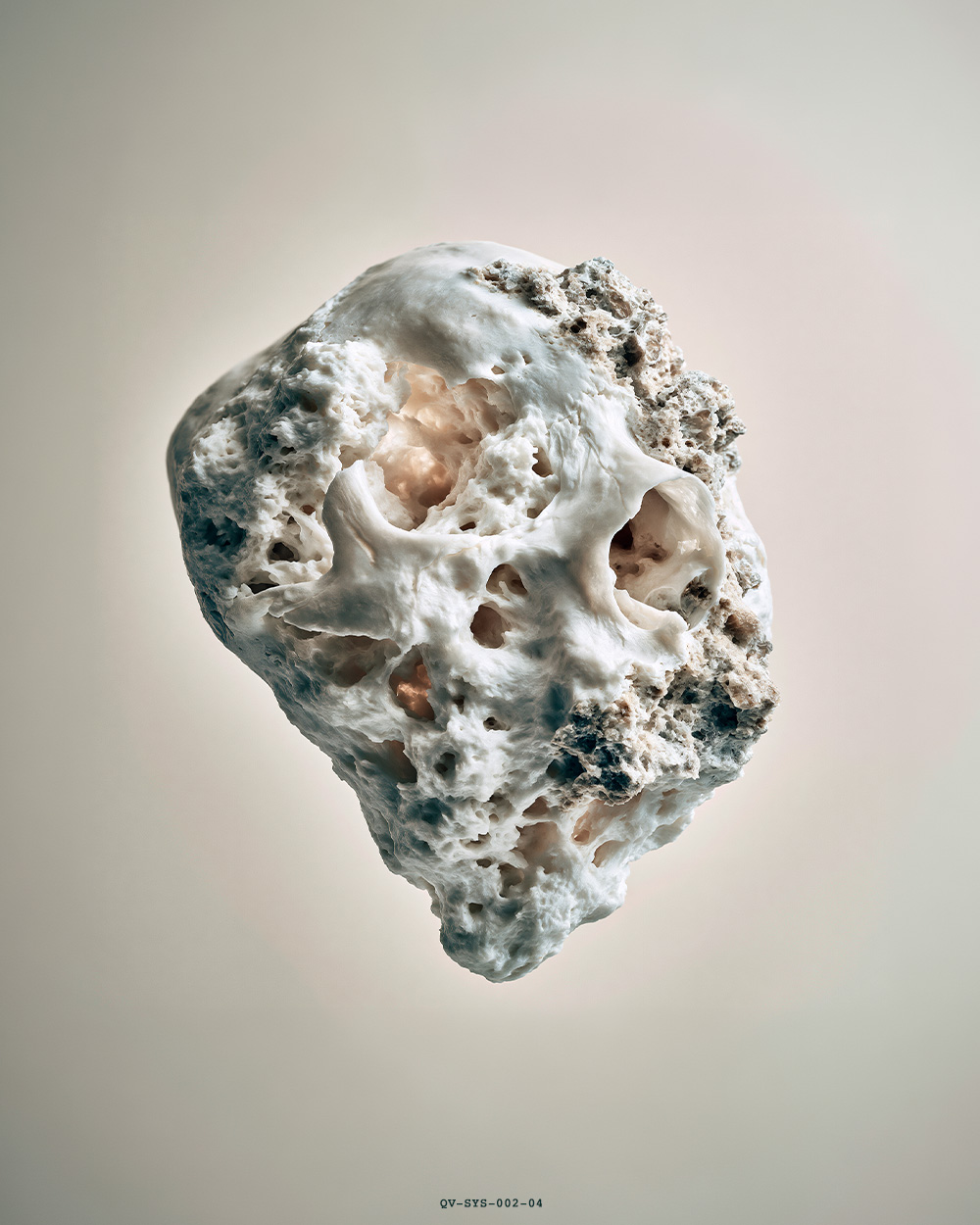
“Perhaps perfection has never been nature’s goal.”
Reflection
The longer this investigation continued, the less it became a question about biology alone. Instead, it began to reveal something about the assumptions embedded within human thinking.
Perfection is one of the concepts we rarely question. We pursue perfect products, perfect systems, perfect organizations and perfect versions of ourselves, often assuming that nature validates this ambition. Yet biology appears to tell a different story. Living systems do not erase variation. They depend on it. They do not eliminate every compromise. They negotiate them continuously. Their resilience emerges not despite change, but because of it.
This Research Note does not argue against precision, craftsmanship or excellence. Nor does it celebrate imperfection for its own sake. Its purpose is simply to question whether one of our oldest cultural ideas meaningfully applies to the systems we admire most.
Perhaps perfection describes an ideal imagined by humans. Adaptation describes the reality observed in nature. If so, the question is no longer whether nature strives for perfection. The question becomes why we believe it should.
Perfection may tell us more about human thinking than about living systems.
Continue the Research
This investigation is not intended as a conclusion. It represents one observation within a much broader attempt to understand how living systems organize themselves and how those principles might challenge the assumptions embedded in human thinking.
If perfection proves to be an uncommon concept in biology, countless new questions begin to emerge. Which ideas that shape our societies are equally human constructs? Which concepts disappear once we begin observing living systems instead of projecting our own expectations onto them? Every Research Note published by QQUUEERRYY documents a single step within this ongoing investigation. Each study expands the archive, revisits previous assumptions and opens new directions for future research.
Further Questions
- If perfection is not a biological principle, why has it become such a dominant human ideal?
- Which concepts does biology use instead of perfection to describe living systems?
- How do variation and trade-offs contribute to long-term resilience?
- Can organizations, technologies and design processes become more adaptive by learning from biological systems?
- What other assumptions do we mistake for universal truths simply because they are deeply embedded in human culture?
References
- Andreas Wagner
Arrival of the Fittest
(Variation, innovation and evolutionary adaptation.) - Stephen Jay Gould
Full House: The Spread of Excellence from Plato to Darwin
(A profound critique of the idea of progress and perfection in evolution.) - Richard Lewontin
The Triple Helix
(Organisms and environments as continuously interacting systems.) - François Jacob
Evolution and Tinkering
(The classic essay describing evolution as a process of modification rather than ideal design.) - Donella H. Meadows
Thinking in Systems
(Systemic relationships, feedback and adaptation.) - Kevin N. Laland
Darwin’s Unfinished Symphony
(Culture, evolution and adaptive processes beyond genetic inheritance.)
Suggested Reading
- Stephen Jay Gould - Full House: The Spread of Excellence from Plato to Darwin
- Andreas Wagner - Arrival of the Fittest
- Donella H. Meadows - Thinking in Systems
Research Information
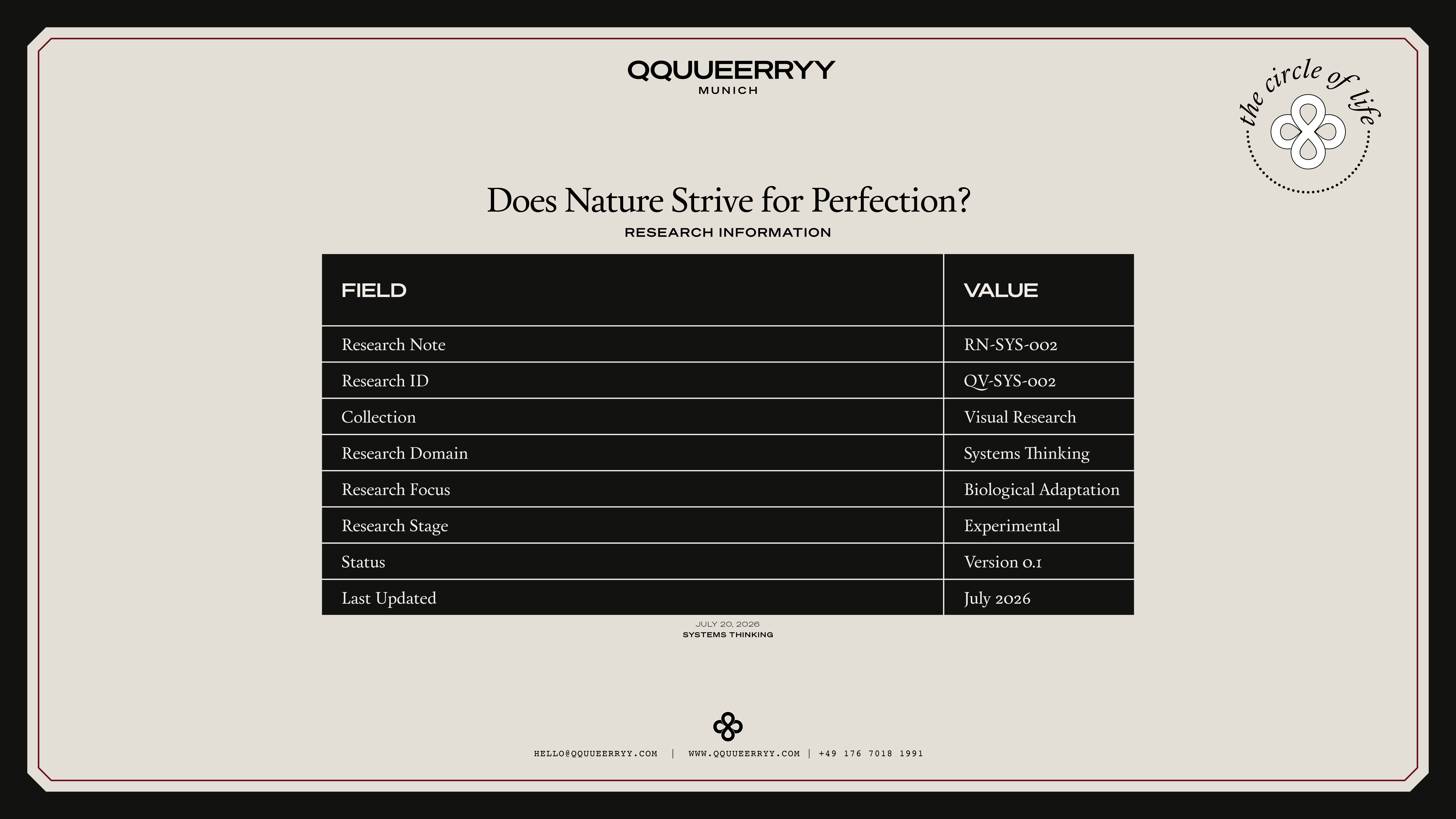
Method Statement: QQUUEERRYY is grounded in an iterative research methodology combining biological inquiry, scientific literature, systems thinking, observation, writing, curation and visual communication. This visual was developed within this research process and may incorporate generative artificial intelligence as one of several tools used to support exploration, visualization and communication.
Every answer creates another question. The investigation continues.